

Bilateral project implemented within the framework of cooperation between the Serbian Academy of Sciences and Arts and the Bulgarian Academy of Sciences for the period 2026 – 2028
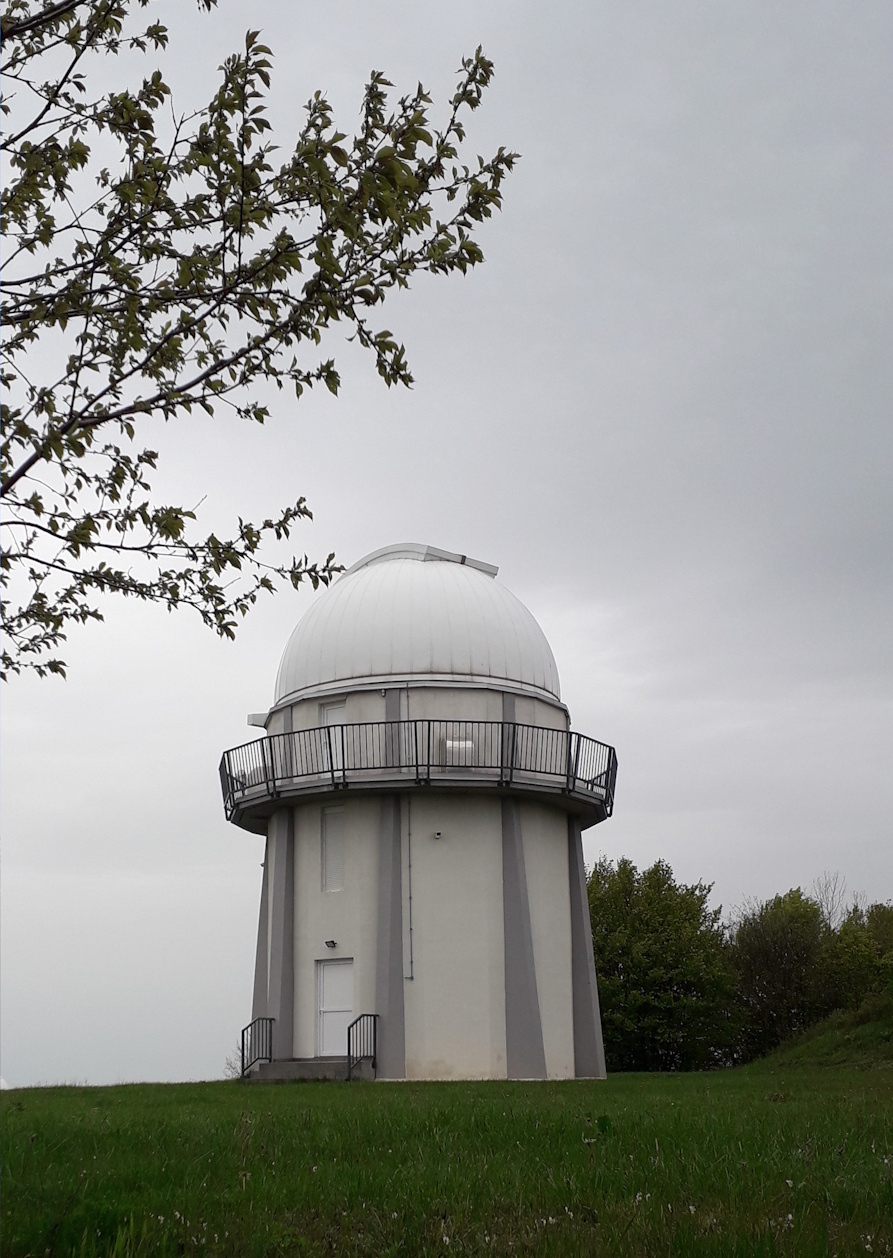
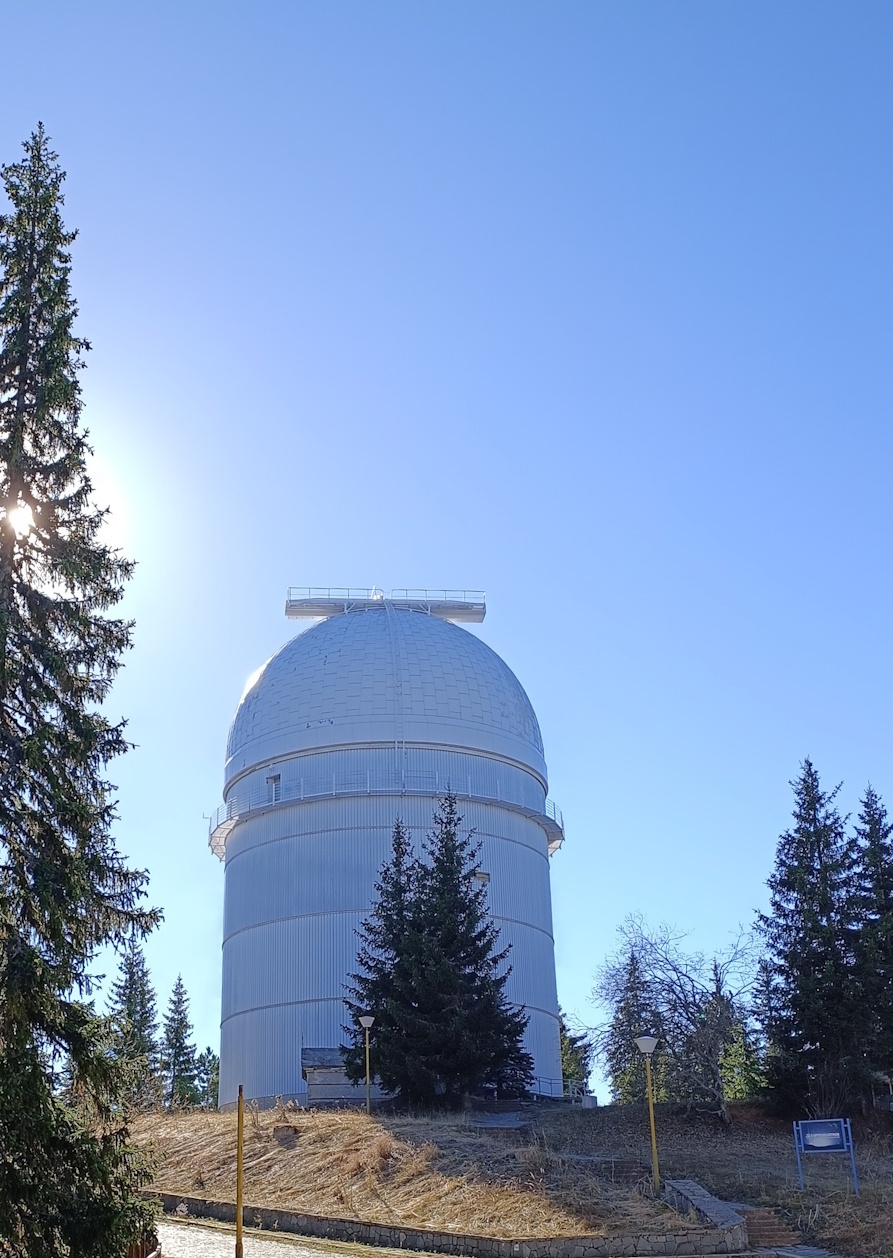
AGNs are objects the brightness of which changes during the night, in short and long periods of time. Therefore, we have been actively observing the brightness of the mentioned objects since 2013 at the Astronomical Observatory, Belgrade, Serbia (AOB) and National Astronomical Observatory Rozhen, Bulgaria (NAO Rozhen). It is very important that these observations are continued and the light curves of these objects are obtained with as few time gaps in the observation as possible. Also, some objects are very faint and they must be observed (in addition to the available 1.4 m telescope of the Astronomical station Vidojevica, AOB) with the 2 m telescope mounted on the NAO Rozhen.
The cooperation between the colleagues from Astronomical Observatory, Belgrade, Serbia (AOB) and National Astronomical Observatory Rozhen, Bulgaria (NAO Rozhen) has been going on for many years. Seven contracts between Serbian Academy of Sciences and Arts (SASA) and Bulgarian Academy of Sciences (BAS) have been signed since 2017, the participants of which are also participants in this project. The two projects were signed for the period 2017-2019, the one contract for the period 2020-2022, the two for the period 2023-2025 and two for the period 2026-2028. Observations of some of the 47 objects to which this project is dedicated were performed with the AOB and NAO Rozhen telescopes within the framework of the mentioned (as well as previous) SASA-BAS projects by the participants of this project. In addition to these objects, other objects were also observed: radio-sources visible in optical domain for the WEBT (Whole Earth Blazar Telescope), Gaia FUN-TO (Gaia Follow Up Network for Transients Objects), and BH-TOM (Black Hole Target and Observation Manager) projects, double and multiple stars, etc. Observations and analysis results concerning the objects of this project have been published in: PhD thesis of Dr. M. D. Jovanovic (Variation of V and R magnitudes for selected quasars and the link between the Gaia CRF and ICRF systems), Serbian astronomical journal (vol. 199), Monthly Notices of the Royal Astronomical Society (vol. 522), and presented at several scientific meetings. The results have been sent to international databases and are available for other scientists to use.
From the Serbian side:
- Project leader: Dr. Miljana D. Jovanović
- Project participants: Dr. Goran Damljanović and Dr. Oliver Vince
From the Bulgarian side:
- Project leader: Dr. Yanko Nikolov
- Project participants: Dr. Rumen Bachev and Dr. Georgi Latev
One of the main objectives of the Gaia mission of the European Space Agency is to construct a celestial reference frame at the wavelengths of the optical domain, Gaia CRF. This reference frame needs a link to the International Celestial Reference Frame – ICRF which is fixed with respect to distant objects (quasars). The objects serving for the purpose of linking are required to be visible in both domains (optical and radio). A set of 47 such objects has been proposed which in the radio domain have no detected extended emission. The mentioned objects are active galactic nuclei (AGNs) the brightness of which varies over the whole electromagnetic spectrum. The brightness change may be due to activity in different AGN regions, but also to external factors. Such variations can lead to changes in the photocentre position and, consequently, to changes of the object coordinates.